
In Part 1 of our AgriEnergy Cycle series, we looked at soil biology — the organisms working below the surface to break down residue, recycle nutrients, and help create a better environment for roots.
That brings us naturally to the next stage of the Cycle: Soil Nutrients.
At first glance, fertility seems pretty straightforward. A crop needs nutrients, so we test the soil, determine what is lacking, and apply what the crop needs.
But there is an important difference between having nutrients in the soil and having nutrients the plant can actually use.
That difference is where nutrient management gets interesting.
What’s There Isn’t Always What’s Available
A soil test can tell us a great deal about the fertility in a field. It can identify nutrients that are low, help us monitor trends, and give us a foundation for building a fertility program.
But a soil test is only part of the picture.
A nutrient may be present in the soil and still be difficult for the crop to access. Soil temperature, moisture, compaction, biological activity, root development, and other conditions can all influence whether a nutrient reaches the plant when it is needed.
Phosphorus is a good example. Corn can show phosphorus-related stress early in the season even when soil test levels appear adequate. Cool soil conditions can limit phosphorus availability at exactly the time a small plant needs it for early growth.
The nutrient may be there.
The crop just can’t get enough of it yet.
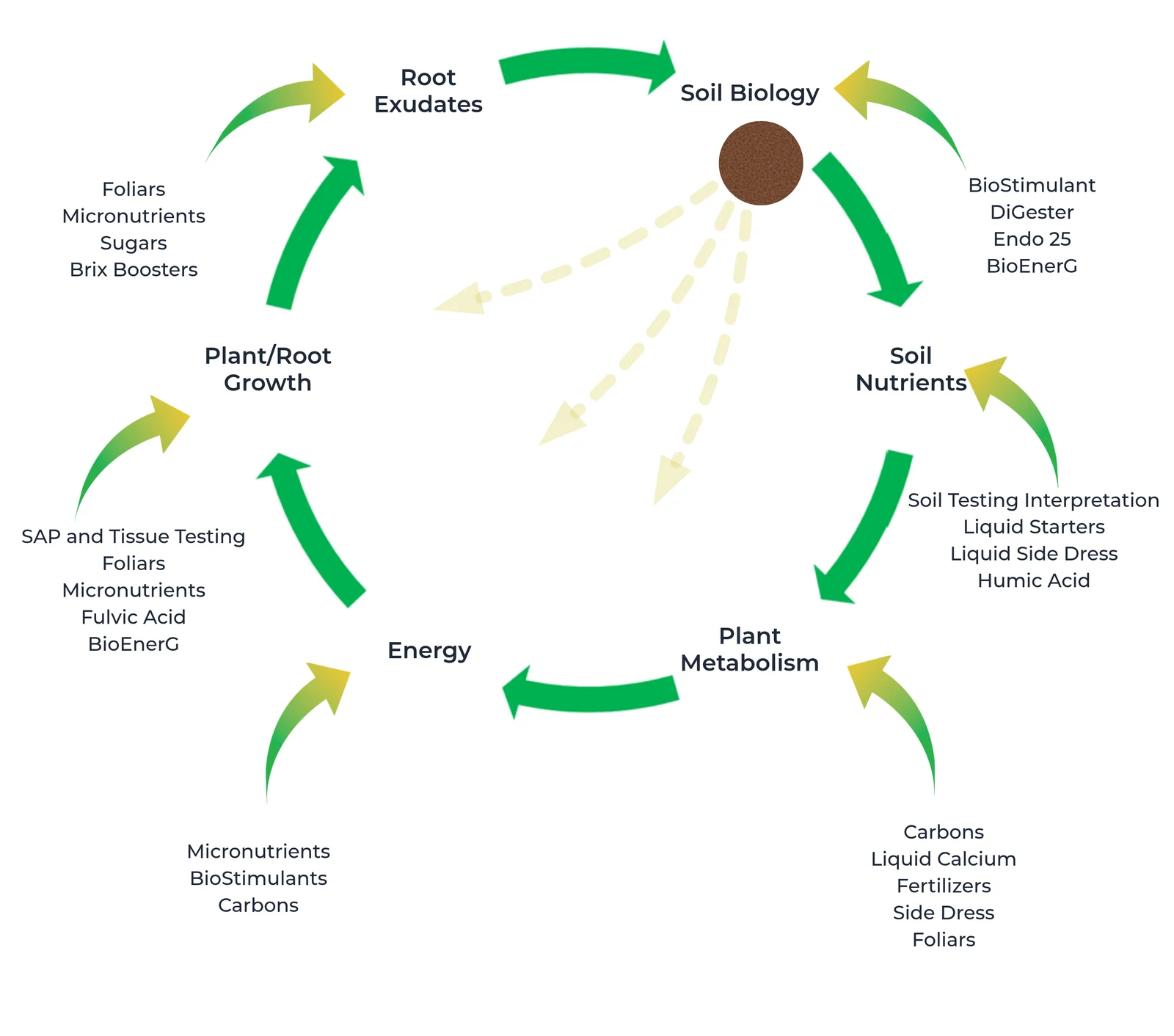
That distinction between nutrient quantity and nutrient availability is central to the Soil Nutrients stage of the AgriEnergy Cycle.
Biology Gets Nutrients Moving
This is where Part 2 connects directly to Part 1.
The biological activity we discussed in the first article helps break down residue and organic materials, releasing nutrients and moving them back through the soil system. Certain microorganisms also play a role in making nutrients more available around developing roots.
But biology doesn’t eliminate the need for fertility.
A healthy biological system and a balanced fertility program work together.
Think of it this way: biology helps keep nutrients cycling, but there still has to be enough of the right nutrients in the system to meet the needs of the crop.
The goal isn’t to choose between biology or fertility.
It is to make the two work together more efficiently.
The Crop Doesn’t Need Everything at Once
One of the easiest traps in fertility management is to think of nutrient needs as a single event.
Apply fertilizer. Plant the crop. Done.
But the crop’s needs change throughout the season.
A young plant establishing roots has different demands than a crop moving through rapid vegetative growth. Those demands shift again as the plant enters reproduction and begins directing more resources toward grain or fruit development.
That means nutrient management needs to be timely.
The AgriEnergy approach is not built around the idea that one large fertilizer application has to carry the entire crop. Soil-applied fertility, starter programs, sidedress applications, foliar nutrition, and other tools give growers opportunities to respond as the crop develops.
The question becomes more practical:
What does the crop need now — and can it get it?
Balanced Fertility Means More Than N-P-K
Nitrogen, phosphorus, and potassium deserve the attention they receive. Crops use them in significant quantities, and shortages can quickly affect growth and yield.
But plants don’t operate on three nutrients alone.
Calcium, sulfur, magnesium, and micronutrients such as boron, zinc, manganese, iron, copper, and molybdenum all perform important jobs within the crop. The amount required may be smaller, but that doesn’t make the nutrient unimportant.
A shortage of one nutrient can affect how well the plant performs even when other nutrients are plentiful.
This is why balanced fertility matters.
Applying more of the nutrient we already have enough of doesn’t necessarily solve a limitation somewhere else in the system.
Sometimes the better question is not, “What do we need more of?”
It is, “What is holding the crop back?”
Conditions Can Change the Fertility Picture
Weather can change nutrient availability quickly.
Cool soils can slow early nutrient availability. Dry conditions reduce nutrient movement toward roots. Excess water can reduce soil oxygen and affect root function. Compaction can limit how much soil the roots are able to explore.
That last point is especially important.
You can apply the correct nutrients at the correct rates and still have a crop struggle if the root system cannot reach them.
A restricted root system explores less soil. Less soil explored means fewer opportunities to intercept water and nutrients. In that situation, what looks like a fertility problem above ground may actually begin with a physical problem below ground.
That is why the stages of the AgriEnergy Cycle cannot really be separated.
Biology, soil structure, water, roots, and nutrients are constantly affecting one another.
Watch the Crop, Not Just the Fertilizer Plan
A fertility plan gives you a starting point.
The crop tells you what is happening next.
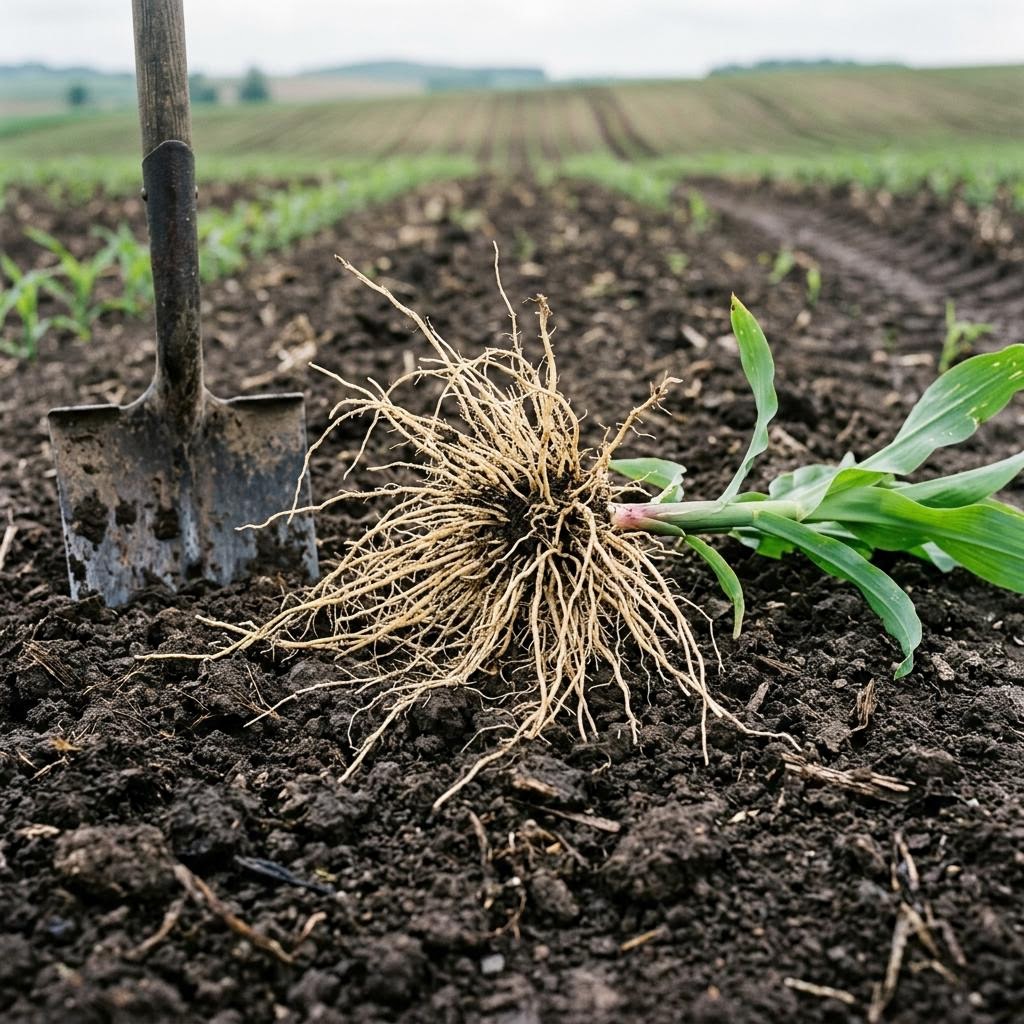
Walk the field. Dig plants. Compare areas that look good with areas that don’t. Look at root development. Pay attention to color, growth, uniformity, and how plants respond as conditions change.
And use testing throughout the season when it makes sense.
Soil testing helps tell us what is available in the soil. Tissue and SAP analysis can provide another look at what the plant is actually taking up as the season progresses.
Together, those tools can help answer two different questions:
- What does the soil have?
- What is the crop getting?
The gap between those answers can be valuable information.
More Fertilizer Isn’t Always the Answer
When a crop appears deficient, the natural response is often to add more fertility.
Sometimes that’s exactly what needs to happen.
But not always.
Before assuming there simply isn’t enough nutrient in the field, consider the conditions around it. Is the soil cold? Is moisture limiting movement? Is the root zone compacted? Are roots healthy and actively exploring the soil? Is biological activity helping cycle nutrients? Is the nutrient present but tied up or unavailable?
Those questions can keep us from treating every symptom as an input shortage.
Good nutrient management is not about applying the least fertilizer possible or the most fertilizer possible.
It is about helping the crop use nutrients efficiently.
A Few Questions Worth Asking in the Field
When you’re evaluating fertility, don’t stop at the application record. Ask what is actually happening in the soil and in the plant.
- Is the crop rooting well?
- Is there adequate moisture without prolonged saturation?
- Are there compacted areas where roots are restricted?
- Are nutrient problems appearing uniformly across the field, or only under certain soil conditions?
- Does the soil test show adequate fertility while the plant still appears deficient?
- Are changing crop demands being monitored as the season progresses?
Those observations can help separate a true lack of fertility from a problem with availability or uptake.
And that can lead to a much better management decision.
From Soil Nutrients to Plant Energy
The Soil Nutrients stage of the AgriEnergy Cycle is not simply about putting fertilizer into the field.
It is about getting balanced nutrition into the plant.
Healthy biology helps release and cycle nutrients. Good soil conditions help keep those nutrients accessible. Strong roots give the crop more opportunity to find them. Timely fertility helps fill the gaps as crop demand changes.
When those pieces come together, the plant has access to the nutrition it needs to do something important with it.
It can turn those nutrients into growth and energy.
And that takes us to the next stage of the AgriEnergy Cycle: Plant Metabolism.
Continue the AgriEnergy Cycle Series
Previous: Part 1: Soil Biology — The Living Engine Beneath Your Feet
Next: Part 3: Plant Metabolism — What the Plant Does With What It Gets
Explore: See the complete AgriEnergy Cycle