
Compaction may not look dramatic from the cab, but it can trigger a cascade of issues that hit both crop performance and profitability: wasted nutrient dollars, reduced water-use efficiency, long-term soil degradation, and yield losses. In short — compaction is one of the most expensive "hidden" problems we deal with.
What Is Compaction?
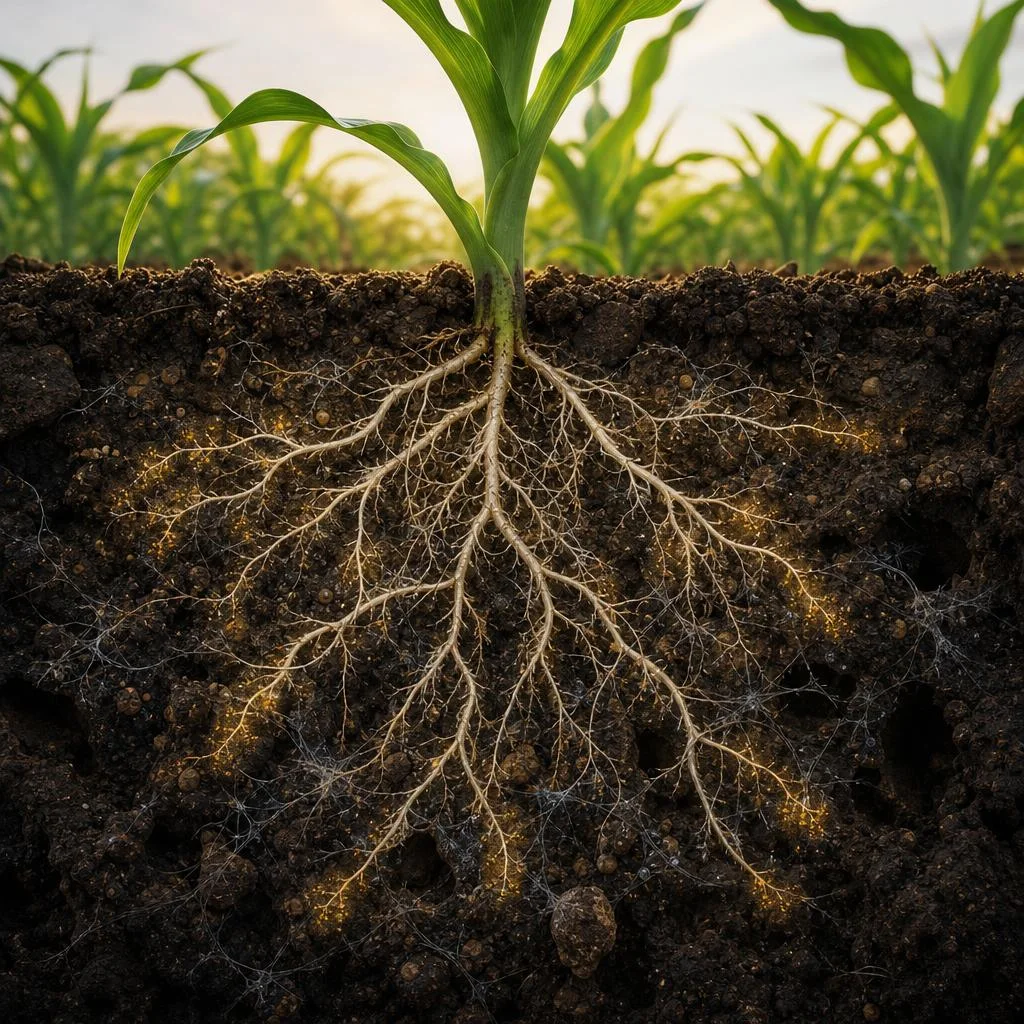
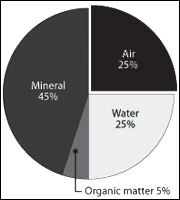
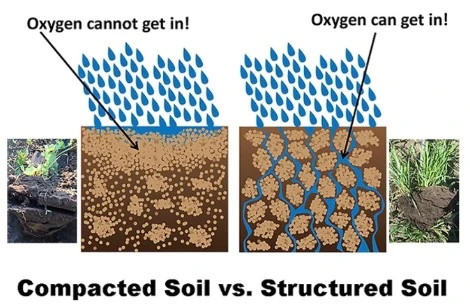
A well-structured soil is roughly half pore space — room for water and air. Compaction occurs when soil particles are pushed together, removing that pore space. When the pores disappear, water infiltration slows, oxygen drops, and roots struggle to explore and feed the crop.
Why It Hurts More Than People Think
It can feel like a harmless decision to work ground a little wet when there are acres to cover. The problem is that the damage often sits just below the surface — right where the crop needs to build its foundation. Compaction commonly leads to:
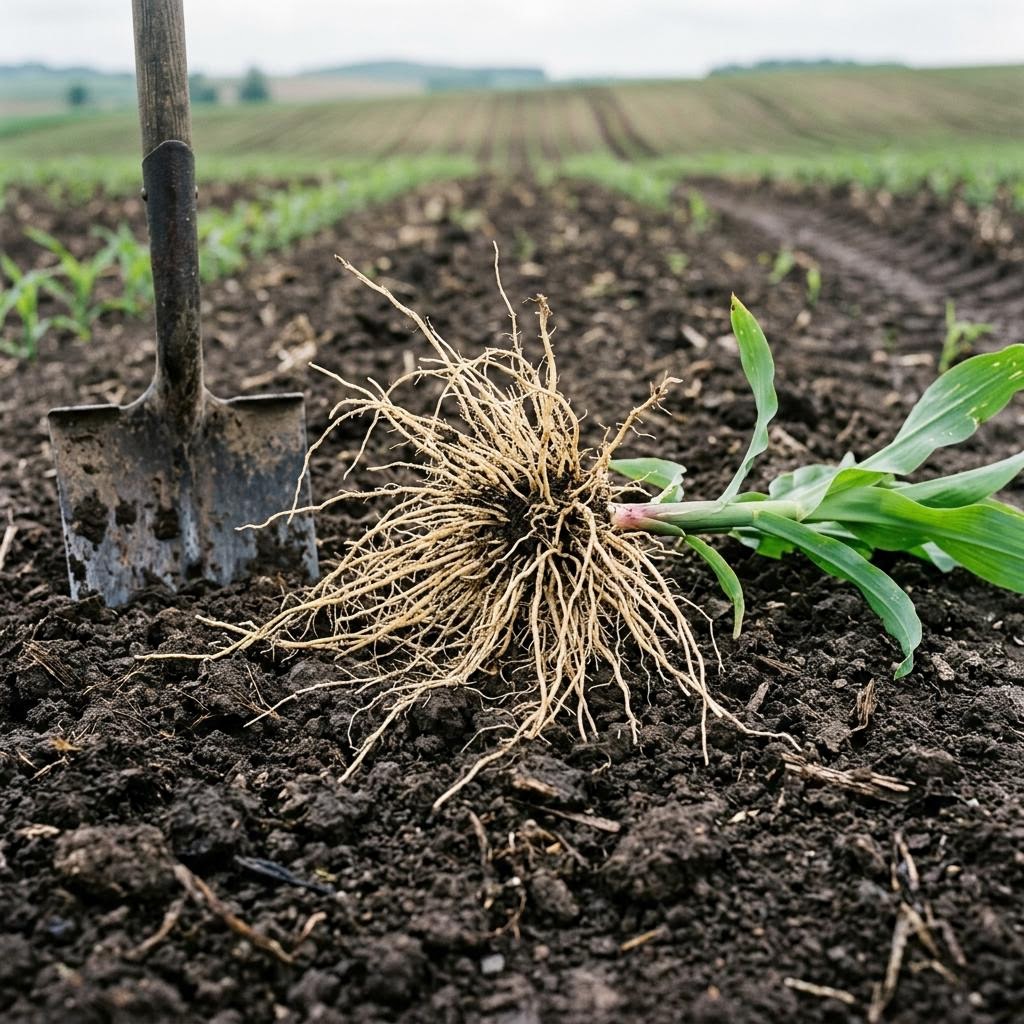
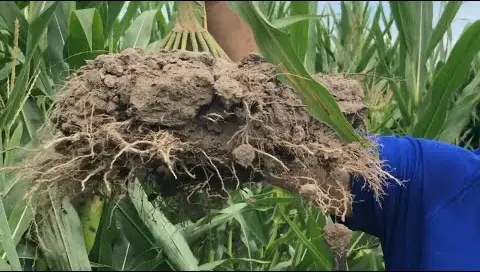
- Restricted root growth
- Reduced water infiltration
- Low oxygen in the root zone
- Nutrient deficiencies — both availability and uptake
- Yield reductions of 10–50%, depending on severity and timing
The Long-Term Effects: Two Root Causes
Most compaction damage traces back to two big drivers: anaerobic (low-oxygen) soil conditions and nutrient dysfunction.
1) Anaerobic Conditions (Low Oxygen)
When compaction reduces oxygen, soils shift toward anaerobic processes. That can lead to:
- Build-up of toxic gases in the soil (e.g. methane and hydrogen sulfide)
- Build-up of gases in plants (e.g. nitrous oxide)
- A crash in microbial populations, slowing decomposition and nutrient release
- Reduced nitrogen fixation — a serious cost in legume systems
2) Nutrient Dysfunction
Compaction doesn't just reduce nutrient uptake — it changes how nutrients move, cycle, and become available:
- Runoff risk increases when nutrients layer near the surface and heavy rains move them off-field
- Poor retention on soil colloids lets nutrients move deeper into the profile, out of reach of shallow, restricted roots
- Reduced microbial populations slow nutrient cycling and organic matter decomposition
- As undecomposed organic matter builds, soils can trend alkaline, leading to phosphorus being fixed
- Poor root exploration limits potassium uptake
- Reduced oxidation limits the availability of nutrients such as phosphorus in the plant-available HPO₄ form
- Decreased root respiration limits the root-zone biology that helps solubilize nutrients for the plant
The end result: you can apply the right nutrients at the right rates and still leave yield on the table because the crop simply cannot get to them.
How Do I Fix It?
The good news is that compaction is addressable. The best approach is usually a system, not a single silver bullet.
1) Improve Soil Flocculation
The enemy of compaction is soil flocculation — the process of tying small particles together into stable aggregates with pore space between them. Soluble calcium is one of the best flocculating materials, commonly applied via gypsum or liquid calcium sources.
2) Speed Residue Degradation and Build Organic Matter
Faster residue degradation builds soil organic matter, which naturally improves structure and creates habitat for the microbes that hold structure together.
3) Use Strategic Tillage — Only When Conditions Are Right
Strategic tillage when soils are dry can help relieve compaction, especially when paired with cover crops that have aggressive, deep-penetrating roots. Roots are nature's tillage tool.
4) Build a Biological System of Farming
Supporting a biological system — while reducing reliance on heavy salt fertilizers — helps maintain healthier soil structure over time. Salts dissolve aggregates; biology builds them.
5) Balance Base Nutrients with Regular Soil Testing
Regular soil testing and keeping base nutrients in balance supports good aeration and nutrient availability.
6) Use Humic Acid Strategically
Humic acid can help by gently lowering soil pH, chelating nutrients, and increasing water-holding capacity — all of which work against the conditions compaction creates.
Products That Help
These tools fit naturally into a compaction-recovery program. Most growers stack two or three depending on their fields and rotation.
- DiGester — accelerates residue degradation and decomposition, building organic matter and feeding the biology that rebuilds structure
- TFR-Ca and Micro-Cal O — soluble calcium sources that flocculate tight soils and improve aggregate formation
- BioEnerG and Endo 25 — beneficial microbes and mycorrhizae that colonize the root zone, expand effective root reach, and free up bound nutrients
- Premium 21 — fortified humic acid that chelates nutrients, supports water-holding capacity, and helps balance soil pH
Compaction is a slow, quiet enemy — but it responds to consistent attention. Get calcium right, feed your biology, manage residue, and respect soil moisture at planting, and you take its biggest weapons away.