
In Part 3 of our AgriEnergy Cycle series, we looked at Plant Metabolism — what happens after nutrients enter the plant and become part of the processes that keep the crop functioning.
When those processes are working well, the plant is able to do something extremely important: capture sunlight through photosynthesis and turn it into usable energy.
That brings us to the fourth stage of the AgriEnergy Cycle: Energy.
Energy can sound like an abstract part of crop production, but there is a practical way to think about it.
Every crop has an energy budget.
Photosynthesis puts energy into that budget. Growth, reproduction, root development, stress response and plant defense all draw from it. The more efficiently the crop can produce and use that energy, the more it has available to do the work required throughout the season.
Where Does the Energy Come From?
The primary source is sunlight.
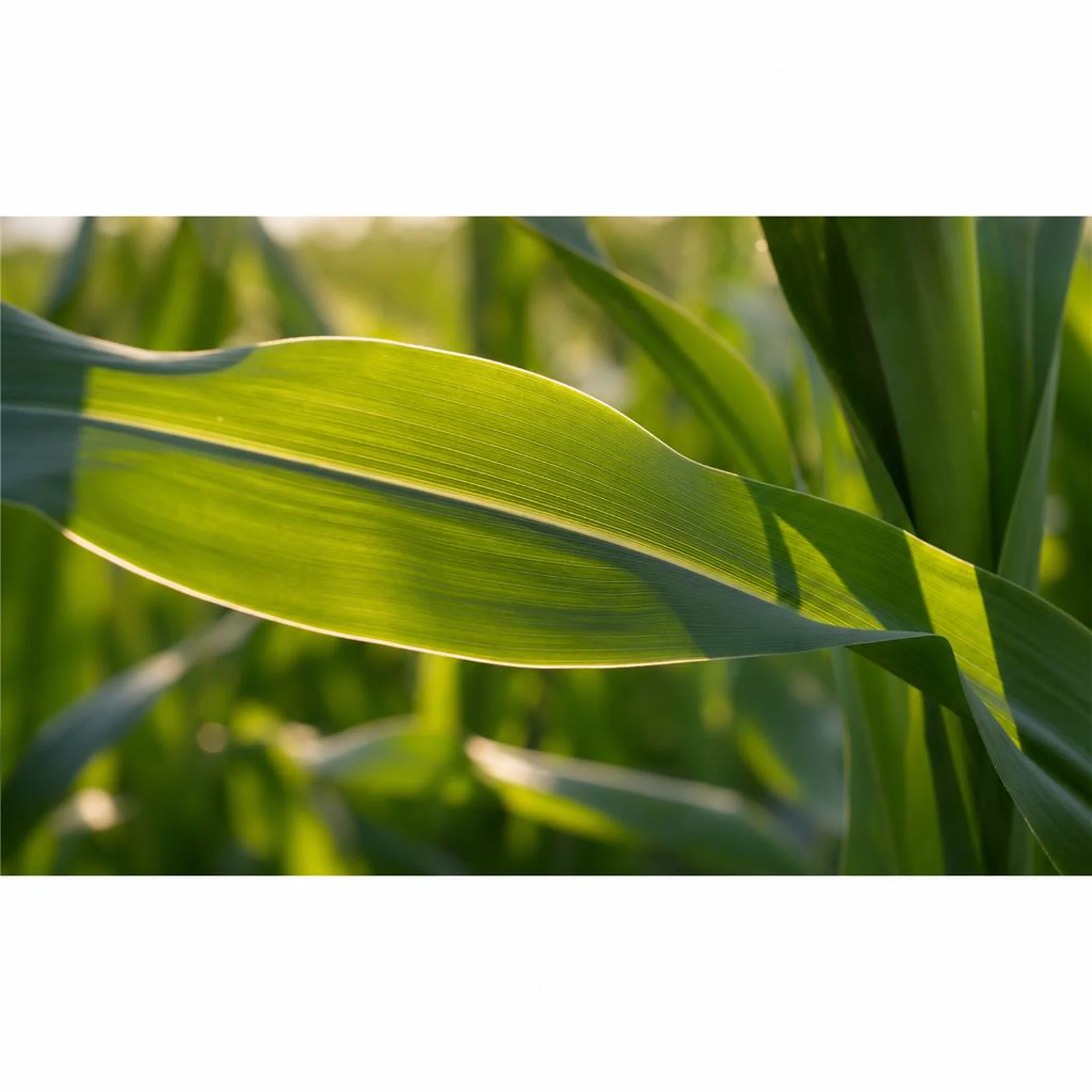
Through photosynthesis, green leaf tissue captures light and uses it to produce carbohydrates. Those carbohydrates provide the energy and building material the plant needs for nearly everything that follows.
That means a healthy leaf is not simply a sign of a healthy crop.
It is part of the crop's energy-producing system.
This becomes especially important as the season progresses. As AgriEnergy has discussed in A Happy and Healthy Soil Plan for 2026, nutrient demand increases as crops move toward reproduction, and photosynthetic activity needs to be functioning at a high level during that period.
By then, the plant is asking a lot of its energy budget.
The Crop Has a Lot to Pay For
Think about everything a plant has to accomplish during a growing season.
- It has to build roots.
- Produce leaves and stems.
- Move water and nutrients.
- Maintain existing tissue.
- Respond to heat, drought and other stresses.
- Defend itself against disease and insect pressure.
- Flower, pollinate and reproduce.
- And eventually fill grain, fruit or seed.
All of those activities require energy.
That is why energy is its own stage of the AgriEnergy Cycle. Good soil biology and balanced fertility are important, but ultimately those earlier stages are helping the plant build the capacity to do work.
Energy is what allows that work to happen.
A Bigger Plant Isn't Always the Whole Story
When we think about crop performance, visible growth naturally gets our attention.
A taller crop with more leaf area can look impressive. But the real question is whether the plant is producing enough energy to support everything it is trying to build — especially when reproductive demand begins to increase.
A crop can spend a tremendous amount of resources producing vegetative growth. Eventually, however, the plant has to shift more of its attention toward reproduction and yield.
That transition puts additional pressure on the system.
The crop still has to maintain leaves, roots and basic plant functions while simultaneously supporting pollination, grain development, seed production or fruit fill.
The energy budget gets tighter.
That is when efficient photosynthesis and balanced nutrition become especially important.
Stress Is Expensive
One of the easiest ways to understand plant energy is to think about what happens when the crop encounters stress.
- A hot, dry stretch can reduce photosynthetic activity and force the plant to manage limited water.
- Saturated soils can reduce root function.
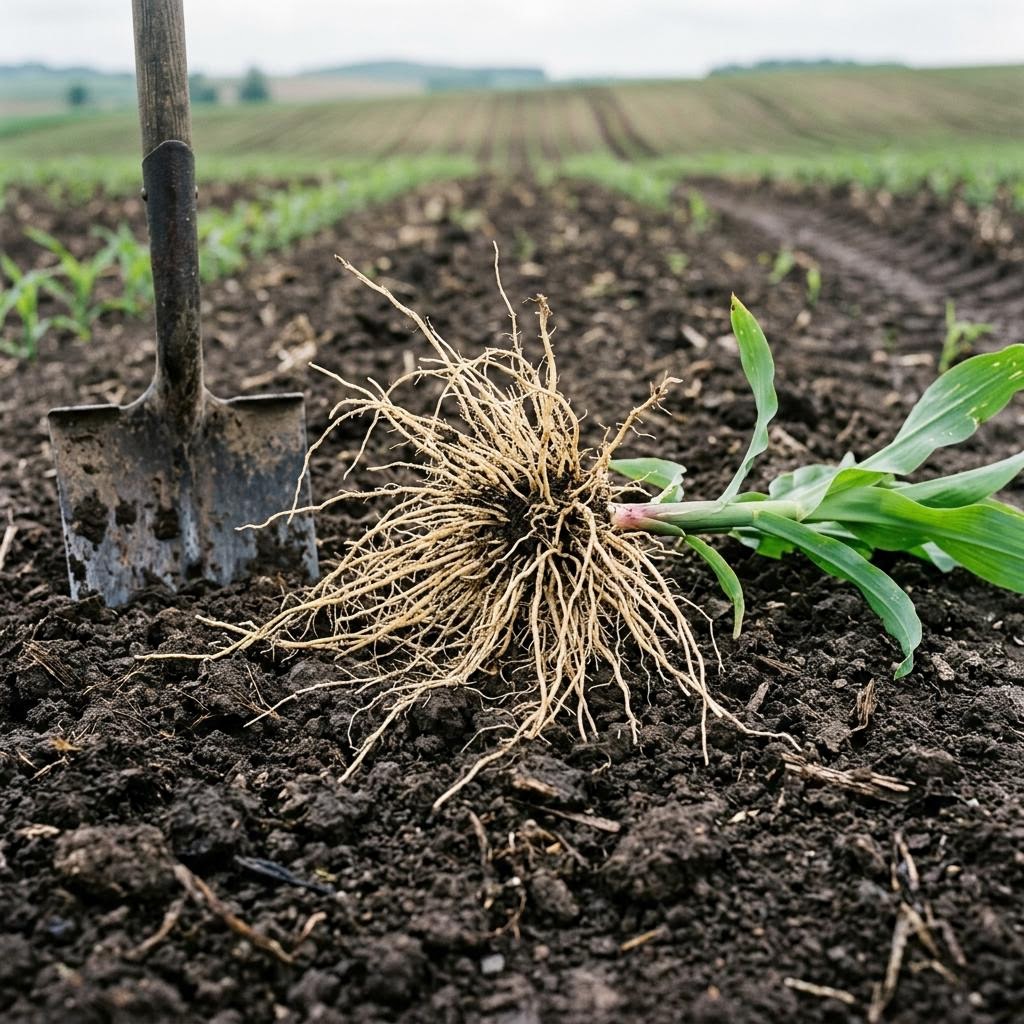
- Compaction can restrict root exploration and make it harder for the plant to access water and nutrients.
- Nutrient deficiencies can interfere with the processes needed to maintain healthy leaf tissue and photosynthesis.
- Disease or insect damage can reduce productive leaf area.
In each situation, the plant may be producing less energy at the same time it is being asked to spend more of it dealing with the problem.
That is a difficult combination.
This is also why two crops with similar fertility programs can perform very differently by the end of the season. What matters isn't simply what was applied. It is how well the plant was able to keep functioning through the conditions it encountered.
Protect the Factory
If leaves are producing much of the plant's energy, protecting healthy leaf area matters.
Walk the field and look beyond whether the plants are simply green.
- Is the canopy uniform?
- Are leaves maintaining good condition?
- Are plants showing early signs of nutrient stress?
- Are certain areas of the field beginning to lose color before others?
- Has disease or insect damage reduced productive leaf area?
- Is the crop recovering after a weather event, or does it continue to struggle?
Those observations can give you clues about how well the plant's energy-producing system is holding up.
This is particularly important during reproduction and grain fill, when maintaining photosynthetic activity can have a major impact on how much yield potential the crop is able to carry through to harvest.
Nutrition Still Matters — But Timing Matters, Too
This is another place where the stages of the Cycle connect.
Part 2 was about getting nutrients to the plant. Part 3 was about using those nutrients within plant metabolism. Now, in Part 4, we can see why maintaining that nutrition throughout the season matters.
A deficiency at a critical growth stage can affect more than appearance.
Potassium is involved in water regulation and nutrient movement. Sulfur supports chlorophyll formation, protein production and photosynthesis. Boron becomes especially important as the crop moves into reproduction.
The plant's needs change as its job changes.
That is one reason in-season fertility and sidedress management can be valuable. The objective isn't simply to apply more fertilizer. It is to support the crop when demand increases and conditions indicate that additional support may be useful.
The question remains the same:
What is the crop trying to accomplish right now, and does it have what it needs to keep doing it?
You Can't Store a Whole Season's Sunlight in Advance
Fertility can be planned months ahead.
Sunlight can't.
Neither can rainfall, heat, disease pressure or many of the other conditions a crop will encounter during the season.
The plant has to keep producing energy day after day.
That makes season-long crop health important. An excellent start matters, but the crop still has to function in June, July and August. It has to continue capturing sunlight and producing carbohydrates as its demands increase.
There is no single application that can guarantee that.
Instead, the goal is to keep as many parts of the system working together as possible: healthy roots, adequate water, available nutrients, productive leaf area and timely management when conditions change.
Look for Energy Problems Before They Become Yield Problems
We cannot stand in a field and directly see a plant's energy reserves.
But we can watch how the crop is performing.
Compare strong areas of the field with weaker ones. Look for differences in canopy development, leaf condition and root growth. Pay attention to how quickly plants recover following heat, drought or excess moisture.
As reproduction begins, watch whether the crop continues to maintain healthy leaf area and steady growth.
And when something doesn't look right, don't automatically assume the answer is simply more fertilizer.
Ask what might be interfering with the plant's ability to capture or use energy.
- Is the root system struggling?
- Is water limiting?
- Is the crop under nutritional stress?
- Has leaf area been damaged?
- Is compaction affecting part of the field?
Those questions can lead to a much better diagnosis than treating every problem as an input shortage.
Energy Is an Outcome
This may be the most important point in Part 4.
You don't apply plant energy out of a jug.
You create the conditions that allow the plant to produce it.
Healthy soil biology helps cycle nutrients. Available nutrients support plant metabolism. Strong metabolism helps the crop photosynthesize efficiently. Healthy leaf tissue keeps capturing sunlight. Good roots help supply the water and nutrition needed to keep that process moving.
Energy is the result of the system working well.
And the better that system works, the more energy the plant has available for everything that comes next.
Where Does the Plant Spend That Energy?
That question takes us directly to the next stage of the AgriEnergy Cycle.
The plant doesn't produce energy simply to store it.
It invests that energy.
Some goes above ground into new leaves, stems, flowers and reproductive development. Some goes below ground into an expanding root system. And as the plant gets larger, those growing roots gain access to more water, more nutrients and more soil.
Energy becomes growth.
And that takes us to Part 5 of the AgriEnergy Cycle: Plant & Root Growth.
Continue the AgriEnergy Cycle Series
Next: Part 5: Plant & Root Growth — More Roots, More Opportunity
Previous: Part 3: Plant Metabolism — What the Plant Does With What It Gets
Earlier: Part 2: Soil Nutrients — It's What the Crop Can Use
Start at Part 1: Soil Biology — The Living Engine Beneath Your Feet
Explore: See the complete AgriEnergy Cycle