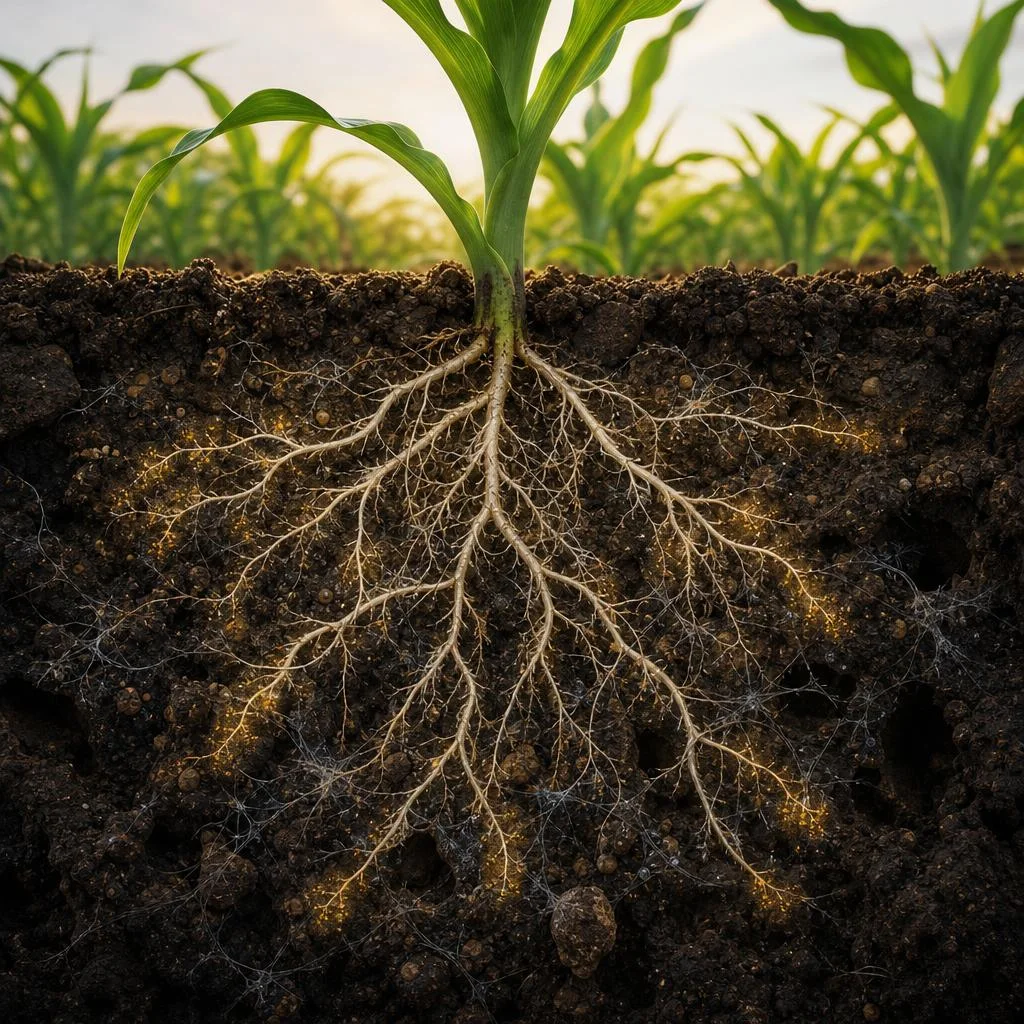

Most of what happens in a crop is easy to see. We can watch it emerge, evaluate plant color and growth, dig roots, scout leaves, and eventually measure yield. Soil biology is different because much of its work happens out of sight, quietly breaking down residue, cycling nutrients, and helping create the kind of soil structure roots need. That is why Soil Biology is the first stage of the AgriEnergy Cycle.
Think of it as the living engine beneath the crop.
If you read our recent article, Better Soil Builds Better Plants — and Better Plants Build Better Soil, you saw how each stage of the Cycle feeds the next. In this series, we’re taking a closer look at each part of that system, starting with the biological activity happening below the surface.
What Is Soil Biology Actually Doing?
Soil is more than sand, silt, clay, and nutrients. It is also home to bacteria, fungi, and other microscopic organisms that are constantly interacting with residue, roots, and organic matter. Their role is fairly simple to understand: they help break materials down, recycle nutrients, and create a better soil environment for the crop.
The goal is not simply to have more microorganisms in the soil. What matters is whether the environment allows those organisms to function well. Good biology depends on the conditions around it just as much as the organisms themselves.
Start by Looking at Residue
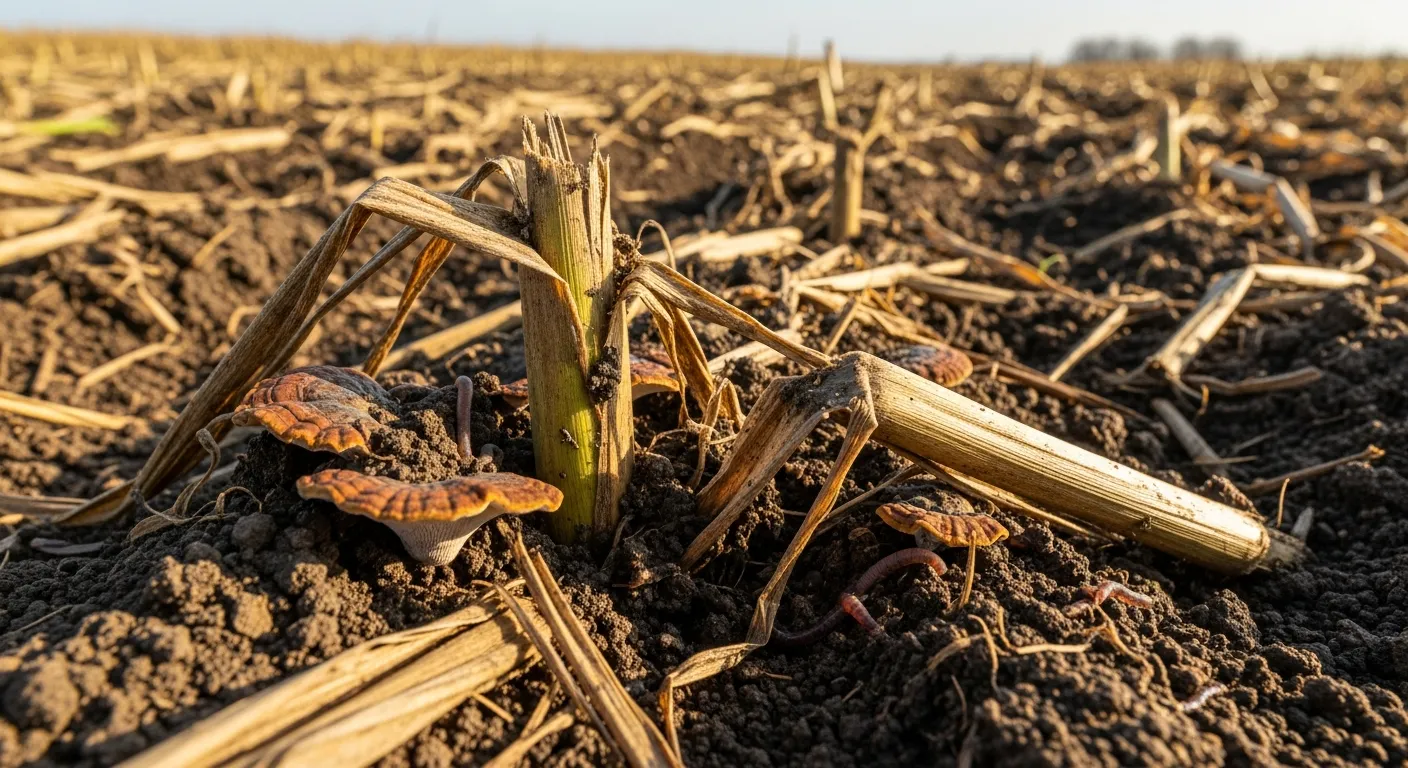
One of the easiest places to see the effects of soil biology is last year’s crop residue. Stalks, leaves, husks, and roots all contain carbon and nutrients, but those materials have to be broken down before much of that fertility can be returned to the system. Soil microorganisms help do that work, gradually softening residue, breaking it apart, and moving those materials back into the soil.
That makes residue more than something left behind after harvest. It is a resource for the next crop.
When residue is still tough and largely unchanged long after harvest, it may be worth asking why. Was it too dry? Too wet? Is the soil compacted? Is biological activity limited? Residue breakdown is not a perfect test of soil biology, but it is one practical clue that can help tell you what is happening below the surface.
Dig the Soil
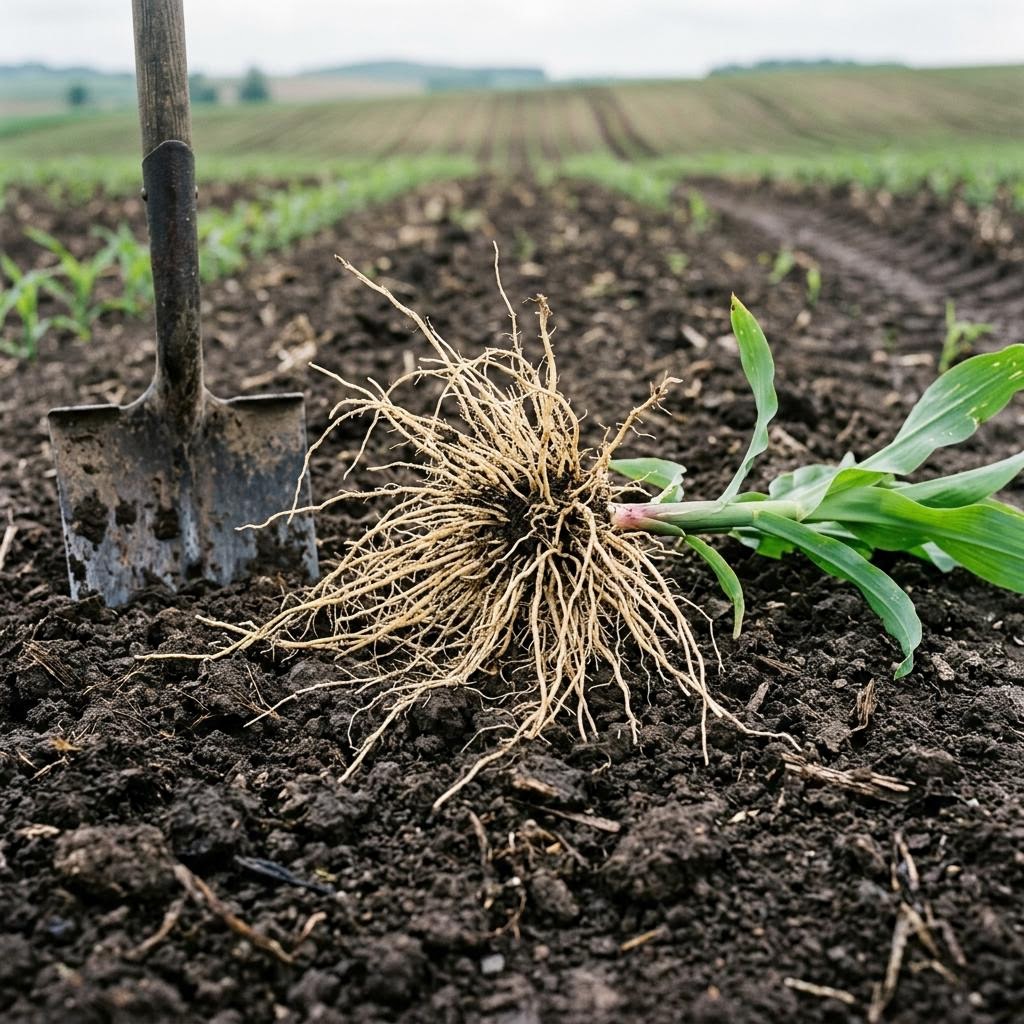
Another useful clue is soil structure. Take a shovel into the field and look at what comes out. Does the soil break apart easily into smaller, crumb-like pieces, or does it come out in hard slabs and dense chunks?
Biological activity helps soil particles form aggregates and pore spaces, and those spaces allow air and water to move through the soil. That matters for both roots and microorganisms. A soil with good structure gives roots more room to explore and creates a better environment for biological activity to continue.
In other words, biology helps build better soil structure, and better soil structure helps support more biology.
Air and Water Matter Underground, Too
We usually think about water in terms of what the crop needs, but soil organisms need the right balance of air and moisture as well. When soils are badly compacted, pore space is reduced. When soils stay saturated, those spaces fill with water instead of air. Either situation can make it harder for soil biology to function well.
That is why managing air and water has always been such an important part of AgriEnergy’s approach. If we want biology to work for us, we have to give it the right environment to work in.
Biology Needs Something to Work On
Every living system needs a source of energy, and in the soil much of that energy starts with plants. Crop residue provides food for microorganisms. Roots provide another source. Organic matter contributes as well. All of that material gives biology something to process and creates opportunities for nutrients to move back through the system.
This does not mean that simply leaving residue on the surface guarantees strong biological activity. It means carbon has to keep moving through the system in a form that biology can use. When that happens, the organisms responsible for decomposition and nutrient cycling have something to work with.
Look at the Roots
Roots can also tell you a lot about what is happening below ground. Are they growing deep and spreading through the soil, or are they turning sideways, following cracks, and struggling to move through dense layers?
Roots are not a direct measurement of soil biology, but roots and microorganisms live in the same environment. If the soil is compacted, poorly aerated, or holding too much water, both can struggle. A strong root system often tells you that the underground environment is working better.
Watch What Happens to Water
The next time you get a good rain, pay attention to what the water does. Does it move into the soil, or does it sit on the surface and run off?
A lot of things affect water movement, including soil type, slope, compaction, and management. But aggregation and pore space matter too. When soil has good structure, water has pathways to move through the profile, and biology plays an important role in helping create that structure.
Don’t Just Add Biology. Manage for It.
This may be one of the most important ideas in the entire discussion. Soil biology is not simply something you add. Even when beneficial microorganisms are introduced into a field, they still have to survive and function in the environment they enter.
That means asking some basic questions. Is there enough moisture? Is there enough air? Is the soil badly compacted? Is there residue or other carbon available? Are roots growing well? Those conditions have a major influence on whether biology can do the work we are asking it to do.
Adding biology and managing for biology are not the same thing.
The best results come when the soil environment supports the organisms you are asking to work there.
What Should You Look For?
You do not need a microscope to begin paying attention to soil biology. Start with what you can see. Look at residue decomposition. Dig the soil and check its structure. Look at the roots. Watch how water moves after a rain. Pay attention to whether the soil is hard and dense or loose and crumbly.
None of those observations tells the whole story by itself. Together, though, they can tell you a lot about whether the system beneath your feet is functioning well.
The Living Engine Beneath the Crop
Soil biology is easy to overlook because we rarely see it directly, but we can see what it does. Residue breaks down. Nutrients are recycled. Soil structure improves. Roots encounter a better environment.
That is why Soil Biology sits at the beginning of the AgriEnergy Cycle. It is not the entire system. It is the living engine that helps the rest of the system work.
And once that engine is working well, the next stage of the Cycle has something to build on.