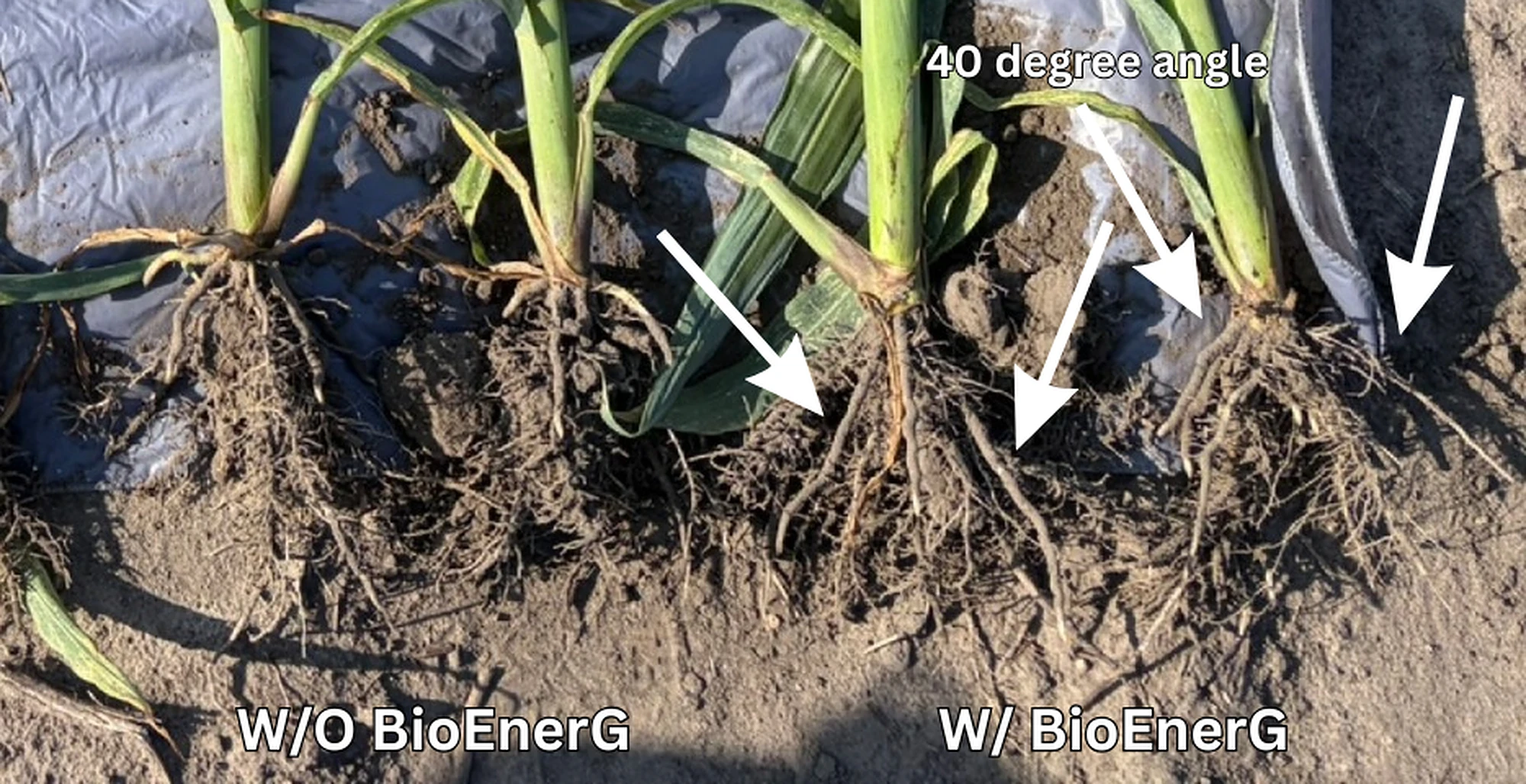
Late June in Plymouth, North Carolina, we stood in replicated plots at North Carolina State University. What we saw was hard to ignore. Our live biological BioEnerG™ is delivering — and adding IN-Duce is taking the results to another level. Talk to us about timing and what that addition can do.
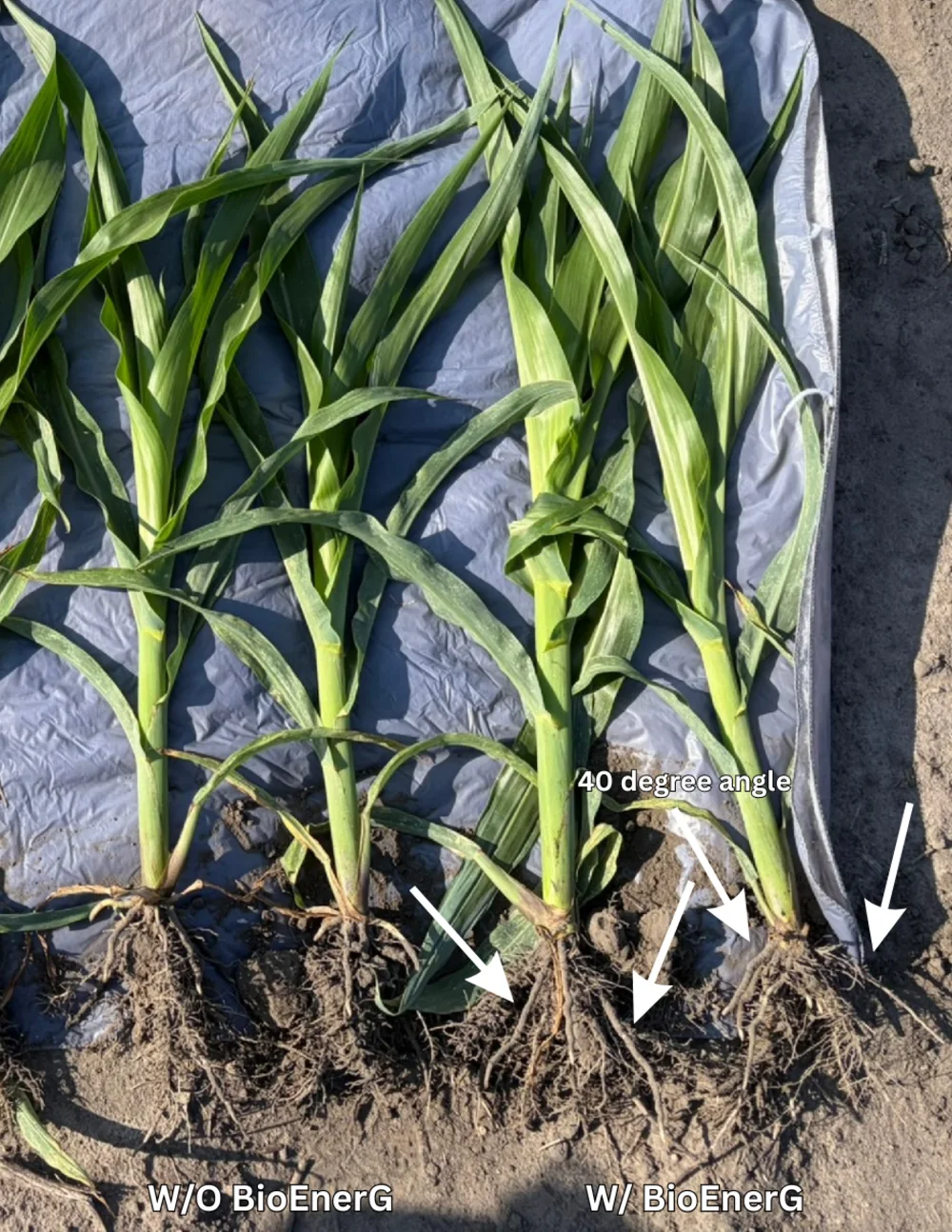
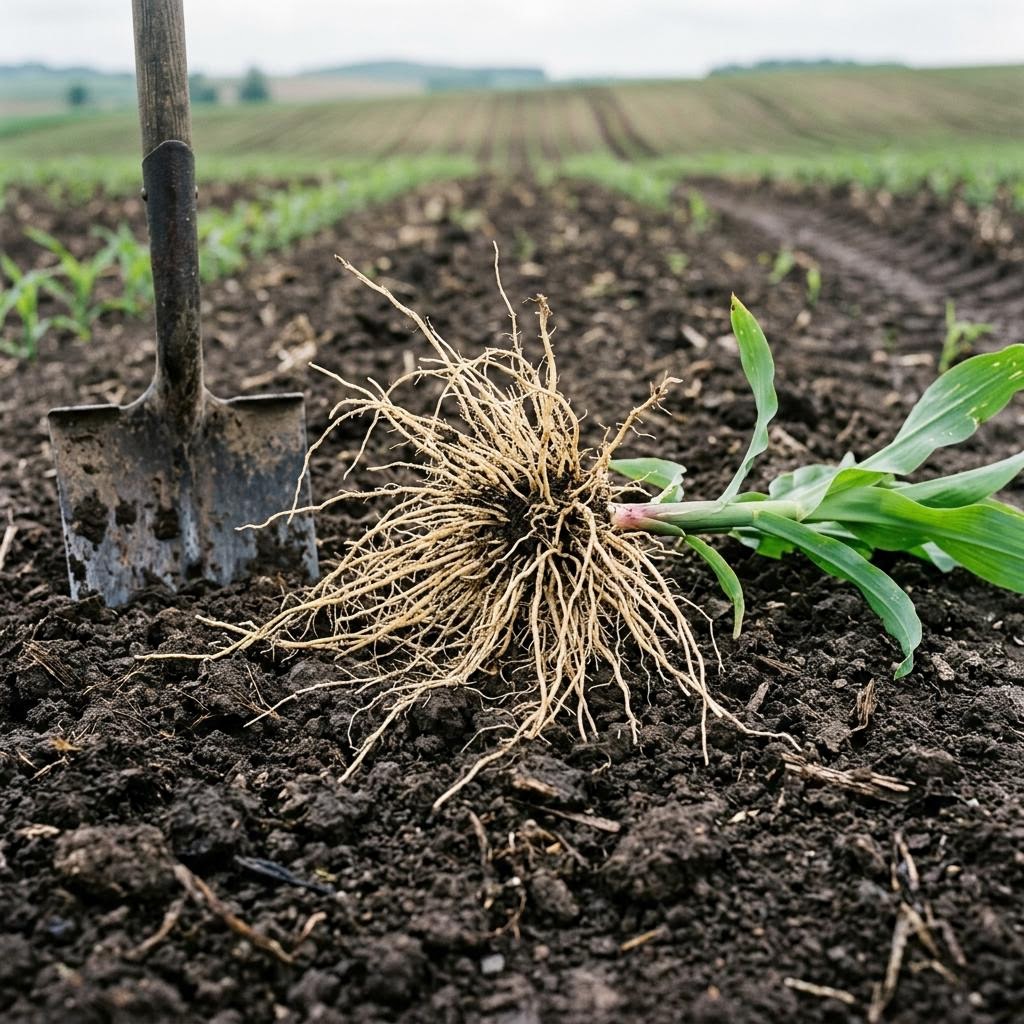
Treated plants show an active, thriving rhizosphere with roots growing at a near-perfect 40° angle, driving cleanly through the soil — exactly where the white arrows point. Untreated roots shoot out in random directions, fighting hard, dry, compacted soil.
This isn't theory. It's a common observation.
Why the Difference Is So Dramatic
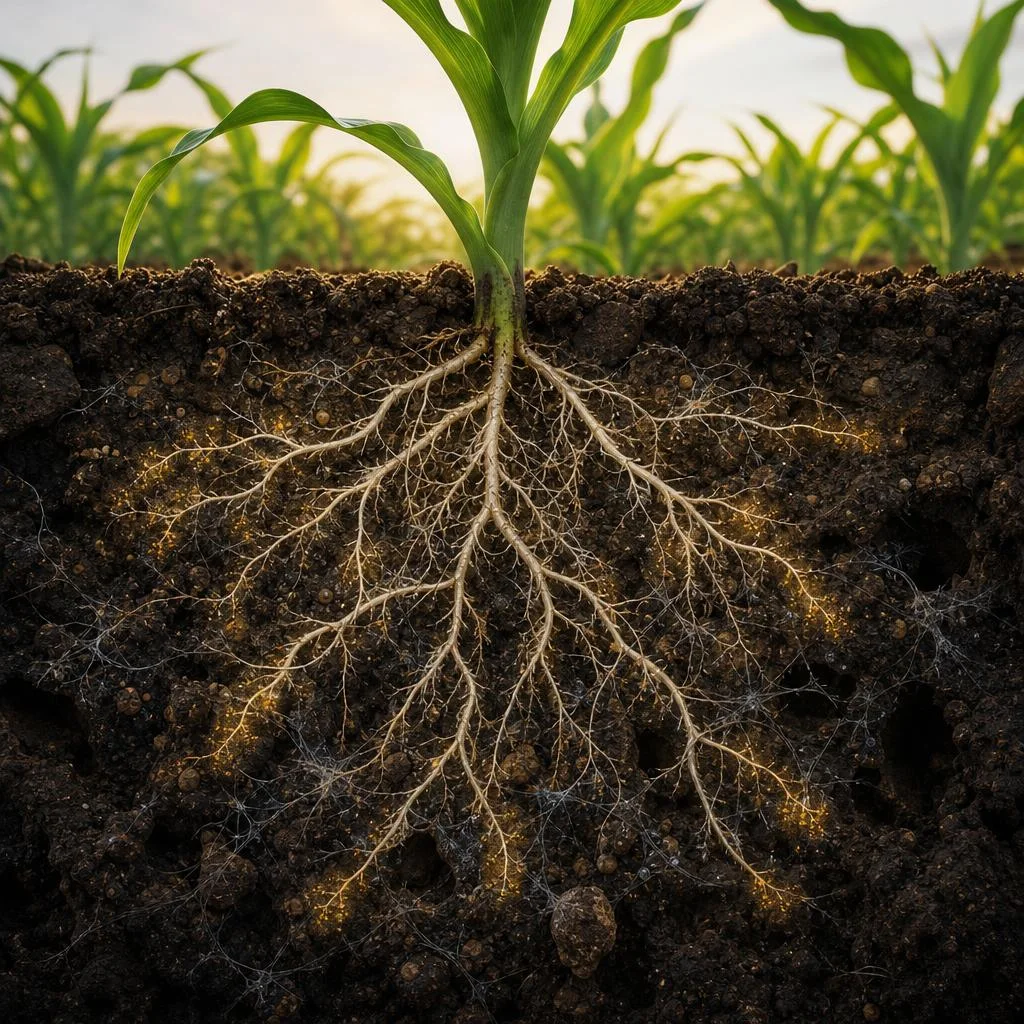
When plants are treated with BioEnerG™, a living microbial, something powerful happens underground.
Natural lubrication kicks in
Roots release more exudates that act like a biological lubricant, helping them penetrate compaction far more easily.
Mucilage — the underground super-sponge
These polysaccharide exudates are loaded with carbon that feeds soil biology. They can hold up to 100× their own weight in water — which is why we often see soils darkening quickly in treated areas.
The Positive Feedback Loop
This is the game-changer. Strong rhizospheres draw more carbohydrates from the plant → the plant produces more sugars → even more exudation occurs → soil biology explodes → nutrient cycling goes into overdrive.
It's a self-reinforcing cycle that gets stronger every day. Better plants enrich the soil and build a lasting legacy that grows even better plants.
A Full Spectrum of Powerful Compounds
Treated plants are pumping out sugars, amino acids, organic acids, and phenolics/flavonoids — each with a specific job that improves plant performance, long-term soil health, and soil tilth.
This is what a Biological Fertility System actually looks like in the real world with BioEnerG: crops that perform better while the soil gets measurably healthier every season, with better tilth. We'll be sharing more field observations throughout the coming months.
The soil is alive. Work with it, not against it.