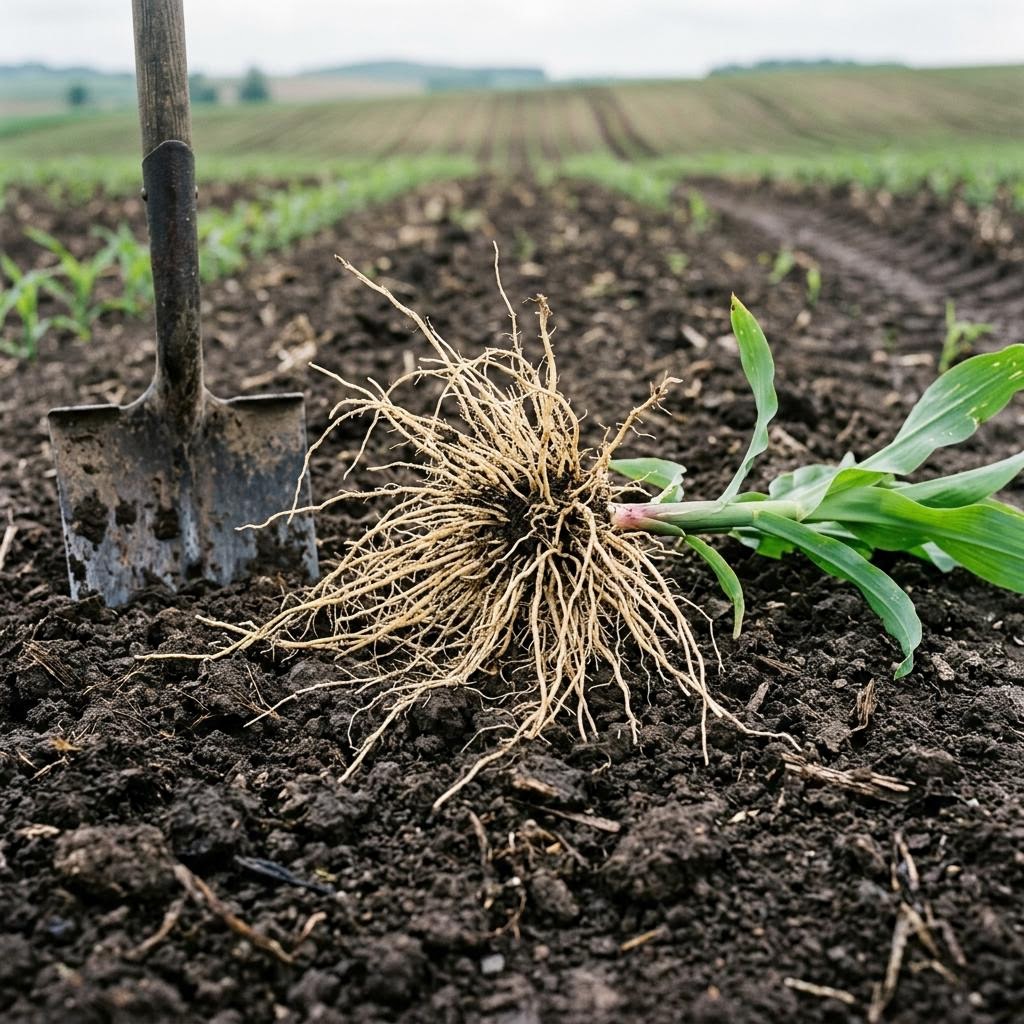
For years we have demonstrated growing corn with greatly reduced added nitrogen rates. Corn on soybean stubble as low as 30# added nitrogen. Corn-on-corn as low as 60#. Excellent sweetcorn for 5 continuous years with no added nitrogen.
Such successes don't just happen. A living active soil is required. A healthy plant is required. Adequate nitrogen must be present to grow a whole corn crop. How much does it take? Amazing things happen in biologically active soil.

Amine Nitrogen
Amine nitrogen is many times more efficient in the plant compared to nitrate for building proteins. Amine N can pass directly into roots from soil, move into the plant and be directly utilized to make proteins. Nitrate requires 25% of a plant's energy to be utilized versus amine nitrogen requiring none. Nitrate takes a significant draw on a plant's carbohydrate reserves for nitrate reduction instead of plant growth.
Aminization
Microbes doing their thing cycling residues and nutrients produce amines. Boosting microbial populations in the rhizosphere or on crop residues results in increased quantities of amines. The breakdown of organic nitrogen from residues, cover crops, manures, or humus (dead microbes themselves) produces amines.

The quantities are small, and amines don't last long in the soil. They are quickly consumed and changed into ammonium then nitrate, the nitrogen cycle. But the plants can also access the amines and greatly enhance their nutrient use efficiency because it requires significantly less carbon to convert the non-organic source back to proteins in the plant.
We have understood that when we significantly reduced added nitrogen we have depended on a slow steady source of nitrogen. Standard soil testing has not identified significant nitrogen pools. But the nitrogen is there, the plants require much less water, excessive vegetative growth is avoided, the flowers/fruit/grain is of higher quality. We want the plant to recover nitrogen directly from the microbial biomass as it cycles.
Charge your plant's rhizosphere with Endo 25 and BioEnerG. Inoculate/seed your crop residues and cover crops with DiGester. Apply live microbes and add biostimulants such as our Transformer mixes to improve your soil's nitrogen supply to your crop.