
Early results are turning heads. We're 30 days into the trial, and the treated corn is already pulling ahead in meaningful ways.
Ear Development: A Strong Head Start
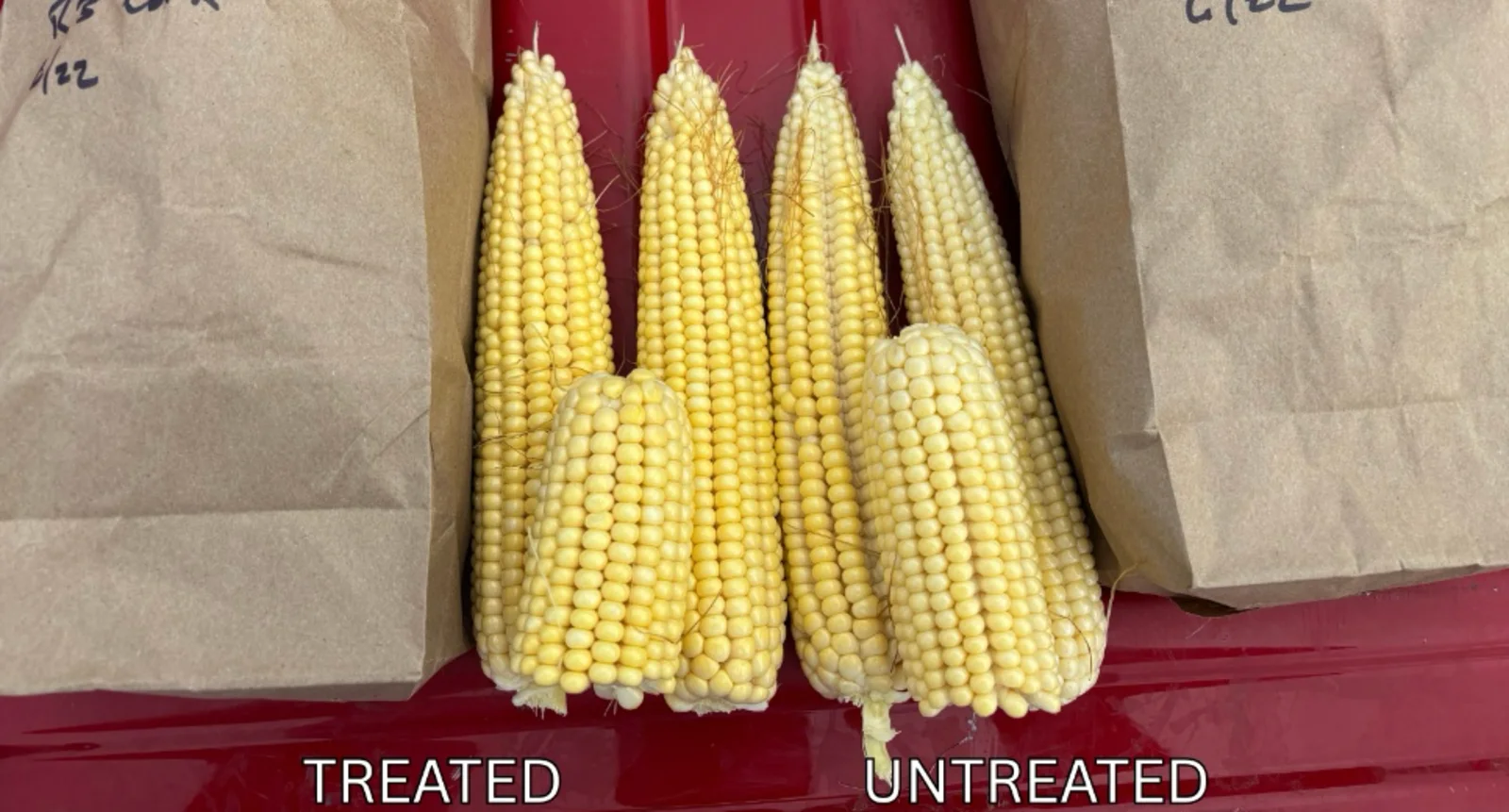
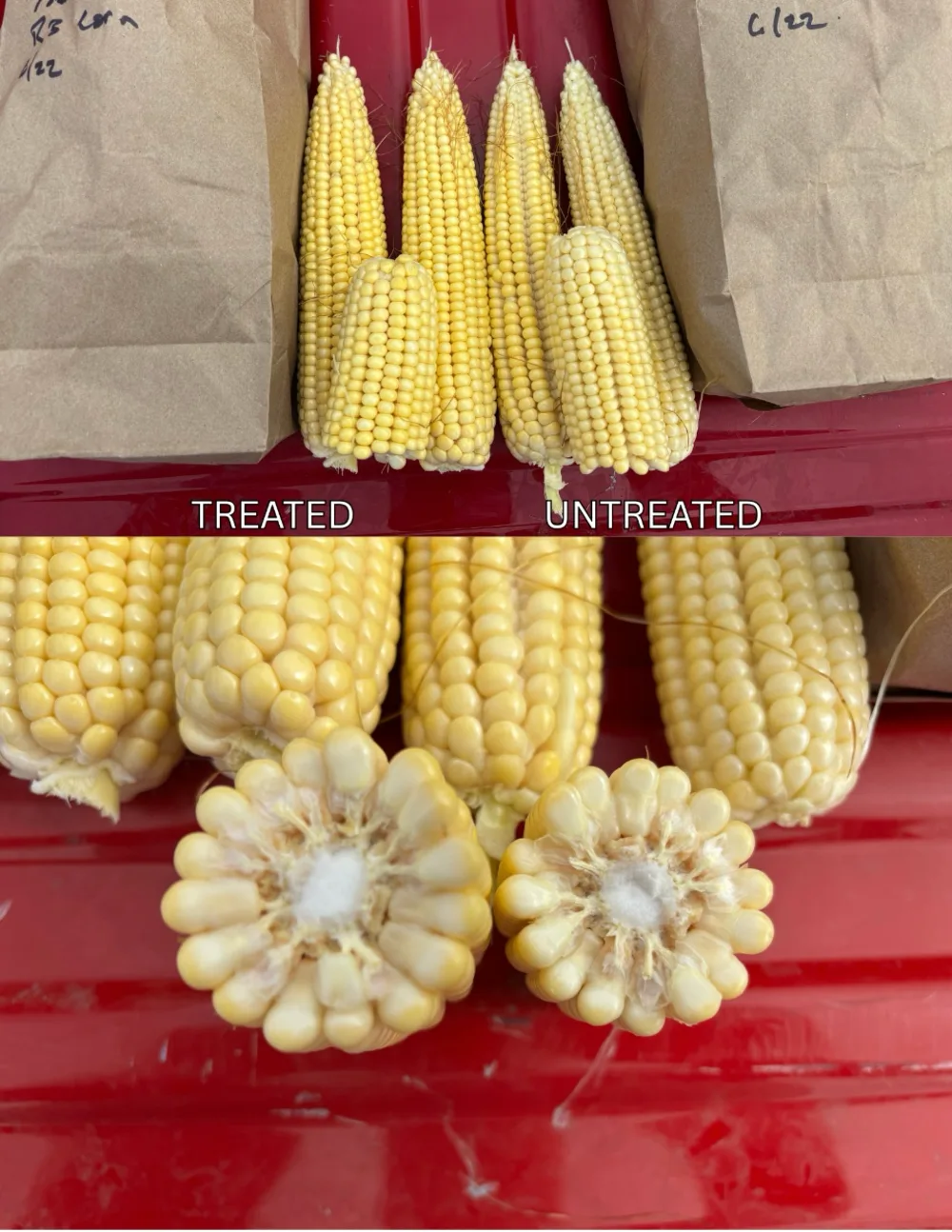
Treated ears are consistently hitting 16 rows around with 30 kernels per row. Untreated ears are averaging 14.6 rows with 28 kernels per row. That's a 16.7% increase in kernels per ear — a solid lead this early in the season. While we're still watching how these differences play out, they could reflect faster grain fill or translate directly into higher yield potential at harvest.
Above-Ground Look: No Big Visual Difference… Yet
From a distance, the treated and untreated plants look fairly similar above ground. But dig a little deeper and the story changes.
Root Systems: A Clear and Consistent Advantage
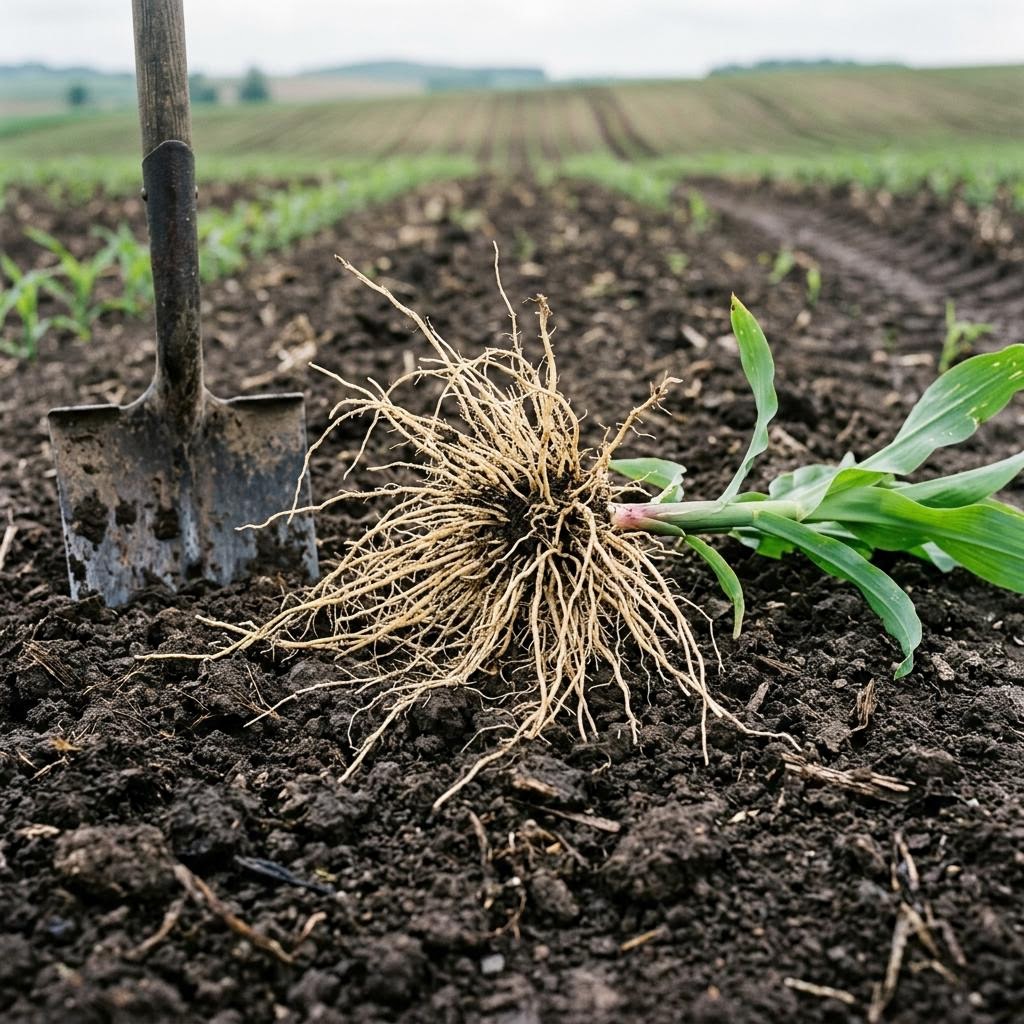
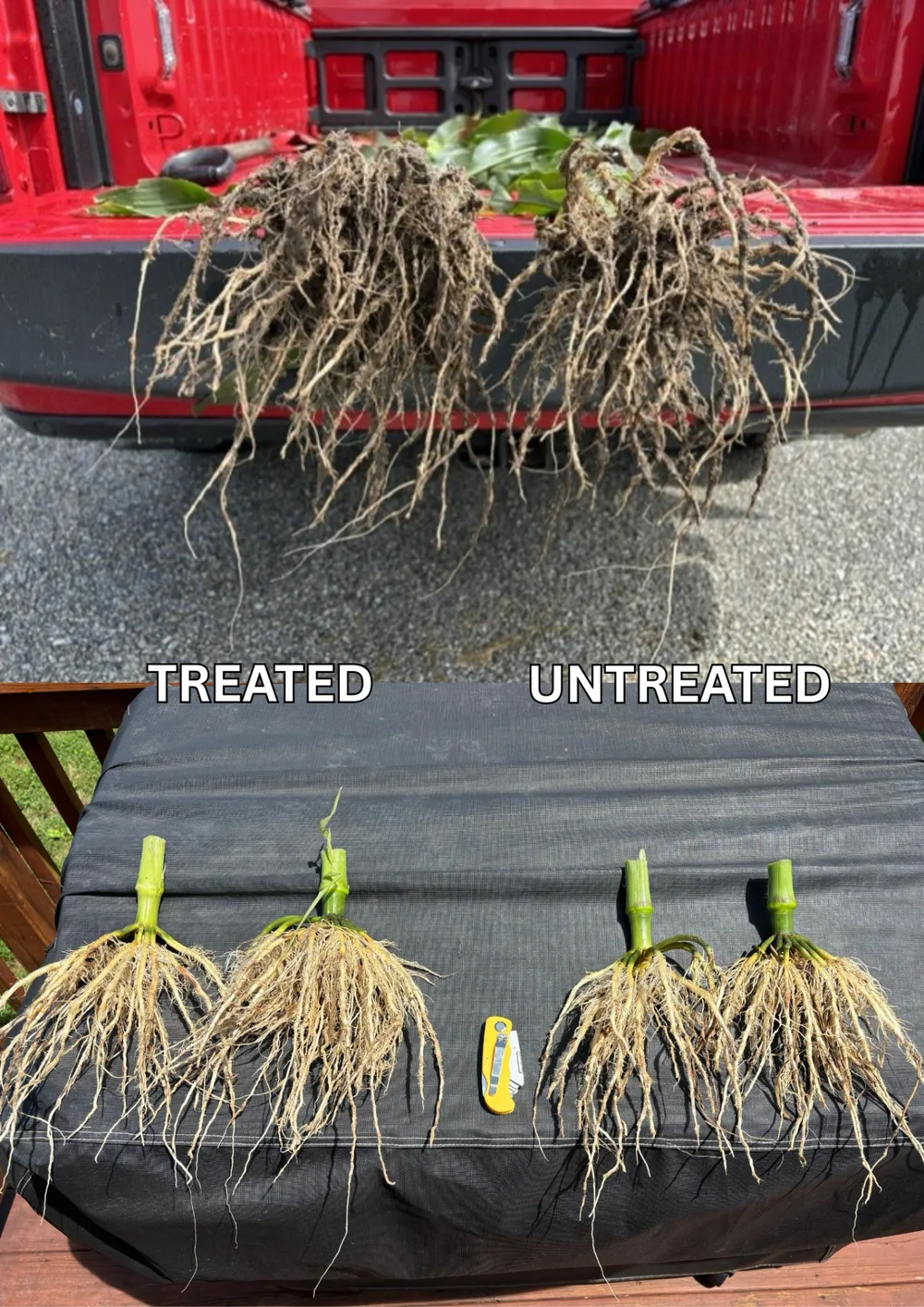
Root mass differences remain impressive. Treated plants show:
- More overall roots
- Active new root growth
- Greater soil exploration
- More soil clinging to the roots
This points to a stronger, healthier symbiotic relationship with soil biology — exactly what we want to see for long-term plant performance and resilience.
Stalk Health: Less Stress, Better Nutrient Management
Cut stalks tell an important story. Treated plants continue to show noticeably less stress. Untreated stalks appear to be cannibalizing their own reserves to support growth and grain fill — a classic sign of stress that the treated plants are avoiding so far.
Tissue Samples Submitted
We've pulled tissue samples and sent them off for analysis. We're looking to see if there are measurable differences in nutrient uptake that help explain the variations we're seeing in ears, stalks, and overall plant health.
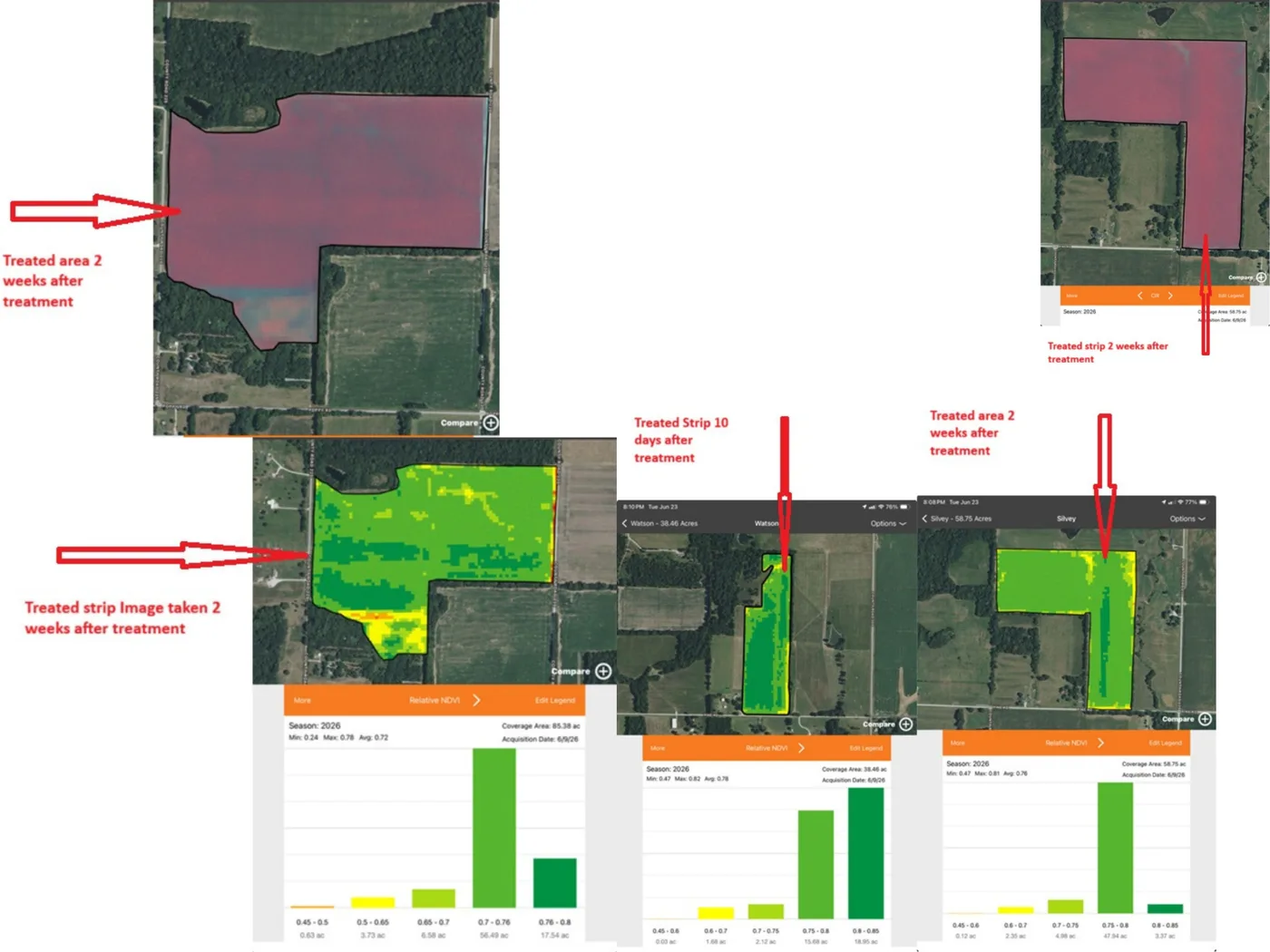
Aerial Imagery: The Biggest Eye-Opener
The most exciting development has come from the sky. Aerial imagery shows a clear difference in NDVI (Normalized Difference Vegetation Index) in the treated areas — indicating more robust, healthier plants that are capturing more sunlight. Color Infrared (CIR) imagery reinforces this, revealing stronger photosynthetic activity in the treated corn compared to the untreated.
The Bottom Line
It's still early, but the treated corn is showing consistent advantages in kernel count, root development, stress reduction, and — most dramatically — in aerial health indicators. We're watching this closely and will keep you updated as the season progresses. Exciting stuff so far!